Professional Ship Simulator PC Download
Professional Ship Simulator is a detailed maritime simulation game designed for players who want to experience the challenges of operating and navigating different types of ships. Instead of focusing on arcade-style gameplay, the simulator puts attention on realistic vessel handling, navigation, weather conditions, ports, open-water environments, and the practical side of life at sea.
For players searching for Professional Ship Simulator PC Download, the game provides an opportunity to take control of a virtual vessel and experience maritime operations from a computer. Its simulation-focused approach makes it suitable for players who enjoy realistic vehicle games, transportation simulators, nautical experiences, and games that reward patience and careful control.
Ship simulators offer a very different experience from traditional driving or flight games. A large vessel does not turn instantly, stopping takes time, and environmental conditions can influence how the ship behaves. These elements make navigation an important part of the experience.
Whether you are interested in learning how ships behave on the water, exploring detailed maritime environments, or simply want to try something different from conventional simulation games, Professional Ship Simulator provides a dedicated nautical experience for PC players.
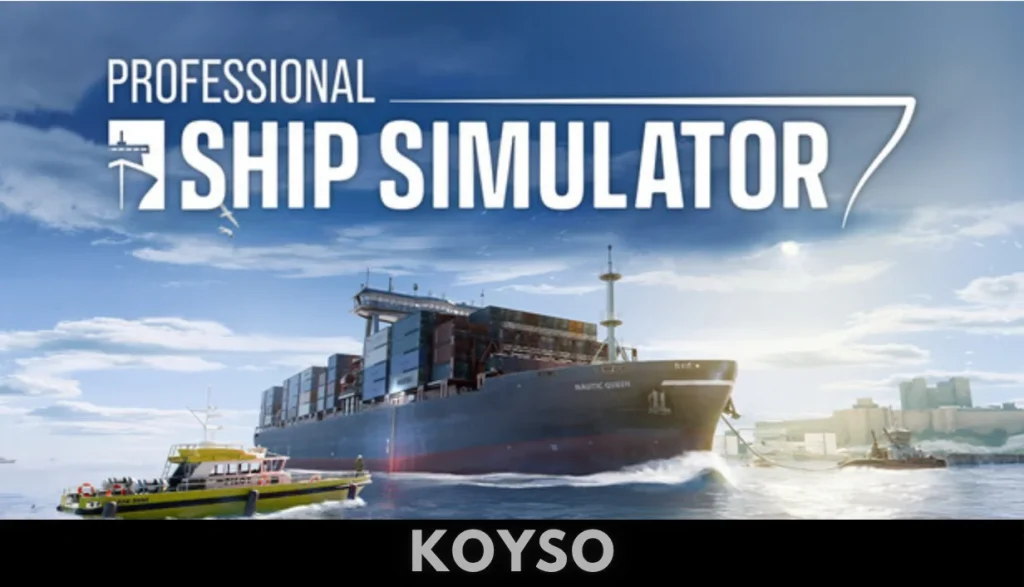
Professional Ship Simulator PC Game Overview
Professional Ship Simulator focuses on the operation of large vessels and the environments in which they travel. The game places the player behind the controls and provides a maritime setting where navigation and ship handling are central to the experience.
Unlike arcade boat games, the simulator emphasizes slower and more deliberate movement. Players need to consider their direction, speed, surroundings, and the space required to maneuver their vessel.
The result is an experience that can feel very different depending on where you are sailing. Open water provides plenty of room for navigation, while ports and confined areas require greater precision.
Quick Game Information
- Game: Professional Ship Simulator
- Genre: Simulation
- Platform: PC
- Mode: Single-player
- Gameplay: Ship operation and maritime navigation
- Setting: Oceans, waterways, and port environments
- Main Focus: Vessel handling and navigation
- Perspective: Ship-based simulation
- Target Audience: Simulation and maritime enthusiasts
What Is Professional Ship Simulator?
Professional Ship Simulator is designed around the idea of controlling and navigating a ship in a virtual maritime environment.
The game allows players to experience the basic challenges associated with operating a vessel. This includes steering, managing speed, navigating through waterways, and dealing with environmental conditions.
The appeal comes from the difference between controlling a ship and controlling a conventional vehicle.
A car can stop relatively quickly, while a large ship has considerable momentum. A vessel also requires space to turn, and its movement can be influenced by water and weather.
These characteristics create a gameplay experience that rewards planning.
A Maritime Simulation Experience
The game is aimed at players who prefer simulation over fast-paced action.
Instead of constantly presenting objectives that require immediate reactions, Professional Ship Simulator encourages you to understand your surroundings and operate your vessel carefully.
You can spend time learning the controls, practicing navigation, and becoming familiar with the way your ship responds to your commands.
Professional Ship Simulator Gameplay
The core gameplay revolves around taking control of a vessel and completing maritime activities.
Depending on the scenario, you may need to travel between locations, navigate through waterways, maneuver around obstacles, or safely reach a destination.
The game encourages players to approach navigation as a process rather than simply holding a direction until they reach their destination.

Ship Controls
Controlling a ship requires more consideration than steering a small vehicle.
Players need to manage:
- Steering direction
- Ship speed
- Acceleration
- Deceleration
- Turning radius
- Vessel positioning
- Navigation direction
- Approach speed
- Environmental conditions
Understanding how these controls interact is an important part of becoming comfortable with the simulator.
Learning the Handling Model
New players may initially find ship movement slow or unusual.
This is because large vessels have significant momentum. If you turn too late, the ship may continue moving in its original direction before completing the maneuver.
Learning to anticipate movement is therefore one of the most important skills in the game.
Navigating Open Water
Open-water navigation is one of the more relaxing parts of the experience.
With fewer obstacles around you, there is more time to focus on maintaining your course and controlling the vessel.
Long journeys can also provide an opportunity to become familiar with the controls without constantly dealing with tight spaces.
Maintaining a Course
Maintaining a consistent heading may appear simple, but small steering adjustments can become important during longer journeys.
Players can practice keeping the vessel aligned with a destination while monitoring their surroundings.
This creates a steady gameplay rhythm that simulation fans may appreciate.
Managing Speed
Speed management is another important aspect of ship operation.
Moving quickly can reduce travel time, but excessive speed can make it harder to maneuver when approaching ports or other confined areas.
A good approach is to reduce speed before entering areas that require precision.
Port Navigation and Maneuvering
Ports provide a greater challenge because available space is limited.
A large vessel cannot simply turn around whenever the player wants. Approaching a dock or navigating a narrow harbor requires careful positioning.

Entering a Port
When approaching a port, players should begin planning their route before reaching the entrance.
Important considerations include:
- Current heading
- Vessel speed
- Available maneuvering space
- Nearby structures
- Turning distance
- Final docking position
Reducing speed early gives you more time to make adjustments.
Docking
Docking is one of the most demanding activities in a ship simulator.
The objective is not just to reach a location but to position the vessel accurately.
Players need to approach slowly and make controlled adjustments rather than attempting to perform the entire maneuver at high speed.
Weather and Environmental Conditions
Maritime environments can change significantly depending on weather conditions.
Wind, waves, visibility, and other environmental factors can influence the overall experience and make navigation more demanding.
Weather also changes the atmosphere of the game.
A calm sea can create a peaceful experience, while rougher conditions can make vessel handling more challenging.
Sailing in Difficult Conditions
When conditions become more difficult, speed management becomes even more important.
A slower vessel gives the player more time to react to changing circumstances.
Players can also become more deliberate with steering rather than making large and sudden corrections.
Realistic Ship Handling
One of the main attractions of Professional Ship Simulator is the emphasis on realistic vessel behavior.
Ships are large machines, and their movement is not instantaneous.
Momentum Matters
When you reduce throttle, a ship does not necessarily stop immediately.
Understanding momentum helps players anticipate how far their vessel will continue traveling.
This is especially important near ports, bridges, coastlines, and other confined environments.
Turning Takes Time
Ships require considerable space to change direction.
The larger the vessel, the more important it becomes to plan turns ahead of time.
Instead of waiting until the last second, players should begin turning early and monitor the vessel’s trajectory.
Exploring Maritime Environments
Professional Ship Simulator gives players an opportunity to explore maritime environments from the perspective of a working vessel.
The scenery can include open water, ports, coastal areas, industrial locations, and other nautical environments depending on the scenario.
Open Seas
Open-water areas give players room to experiment.
These sections are useful for learning the ship’s controls and understanding how the vessel reacts to changes in speed and direction.
Coastal Areas
Coastal navigation requires more attention because land and other environmental features limit the available space.
Players need to remain aware of their surroundings and plan their route accordingly.
Industrial Ports
Ports can introduce structures, docks, narrow channels, and other obstacles.
These environments require precision and provide a more demanding test of ship-handling skills.
Professional Ship Simulator Controls
A good control setup is important for a simulation game.
Players should take some time to become familiar with every major control before attempting difficult maneuvers.
Basic Controls to Learn
At the beginning, focus on understanding:
- Steering
- Throttle
- Braking or reverse controls
- Camera movement
- Navigation
- Ship positioning
- View switching
- Interaction controls
Once these controls become familiar, more advanced navigation becomes easier.
Keyboard and Mouse
PC players can use traditional keyboard and mouse controls depending on the game’s configuration.
Keyboard controls can provide quick access to important functions, while the mouse can make camera and interface interaction easier.
Controller Setup
A compatible controller can also make the experience more comfortable for players who prefer analog steering and throttle control.
Simulation games often benefit from analog input because it allows smoother adjustments.
Camera Views
Being able to see your surroundings clearly is important when controlling a large vessel.
Different viewpoints can provide different levels of visibility.
First-Person or Bridge View
A bridge-oriented view can provide a more immersive experience.
It places the player closer to the operational side of the ship and makes navigation feel more personal.
External View
An external camera provides a broader perspective.
This can be useful when maneuvering in tight spaces because players can better understand the vessel’s position relative to nearby objects.
Switching between available views can therefore be useful depending on the situation.
Ship Simulation for Beginners
New players should not expect to master the controls immediately.
Ship movement is fundamentally different from driving a car, so it takes time to develop an understanding of momentum and turning.
Start Slowly
Avoid immediately attempting difficult docking maneuvers.
Spend some time traveling in open water and experiment with:
- Acceleration
- Deceleration
- Turning
- Reversing
- Direction changes
This gives you a better understanding of the vessel.
Practice Turning
Find an open area and practice turning at different speeds.
Notice how the ship responds when you begin a turn early compared with turning at the last moment.
Practice Stopping
Stopping a large vessel requires planning.
Try reducing speed well before reaching your intended stopping point and observe how much distance the ship needs to slow down.
Advanced Ship Handling Tips
Once you understand the basics, you can start developing more advanced navigation habits.
Plan Ahead
Good ship handling begins before the maneuver.
Look at the route and think about where you need the vessel to be several moments from now.
Reduce Speed Before Tight Maneuvers
High speed reduces the amount of time available for corrections.
Slow down before entering ports or narrow waterways.
Use Small Steering Adjustments
Large steering inputs can make it difficult to maintain a stable heading.
Small corrections are often easier to manage.
Monitor Your Position
Do not focus exclusively on the destination.
Pay attention to the ship’s current position and its relationship to nearby objects.
Why Play Professional Ship Simulator on PC?
PC is a natural platform for detailed simulation games.
A larger display can make it easier to monitor the surrounding environment, while a keyboard, mouse, or controller provides flexible control options.
PC Simulation Benefits
Playing Professional Ship Simulator on PC can provide:
- Large-screen gameplay
- Flexible control options
- Adjustable graphics settings
- Easy access to simulation settings
- Comfortable long-session gameplay
- Potential controller support
- Detailed environmental viewing
Players who enjoy simulation games often prefer PC because of the flexibility offered by the platform.
Professional Ship Simulator Graphics
Visual presentation plays an important role in creating an immersive maritime experience.
Water, ports, ships, weather, and coastal environments all contribute to the feeling of being at sea.
Water and Ocean Environments
The ocean provides much of the visual atmosphere.
Large bodies of water create a sense of scale and make long-distance travel feel different from conventional vehicle simulators.
Port Environments
Ports can be visually interesting because they combine ships, industrial structures, docks, cranes, buildings, and other maritime infrastructure.
These areas also provide some of the game’s most demanding navigation situations.
Sound and Immersion
Audio helps make simulation games feel more believable.
Engine sounds, environmental effects, water movement, and other maritime audio can contribute to the overall atmosphere.
When combined with a suitable camera view, sound can make simple navigation feel more immersive.
Professional Ship Simulator Download for PC
Players searching for Professional Ship Simulator PC Download should always verify the exact game title before installing anything.
Ship simulator games can have similar names, and unofficial download pages may use misleading titles.
Before downloading, check:
- Exact game name
- Developer or publisher
- Supported Windows version
- Hardware requirements
- Available storage
- Official storefront information
- Game version
Using a legitimate source also reduces the risk of corrupted files or unwanted software.
How to Download Professional Ship Simulator on PC
If the game is available through an official PC storefront, the general installation process is straightforward:
- Install the required PC game launcher.
- Create or sign in to your account.
- Search for Professional Ship Simulator.
- Confirm that the listing matches the intended game.
- Purchase or obtain the game through the official store.
- Select the installation option.
- Choose the drive where you want to install the game.
- Allow the download to complete.
- Install any available updates.
- Launch the game and configure the controls.
Always verify the source before running an executable downloaded from the internet.
Professional Ship Simulator System Requirements
Before installing a simulation game, it is important to make sure your PC has enough resources to run it.
Simulation titles can place additional demands on the processor and graphics hardware because they may need to calculate vehicle movement, environmental effects, physics, and detailed scenes.
What to Check Before Installation
Check your PC’s:
- Operating system
- CPU
- RAM
- GPU
- DirectX version
- Available storage
- Graphics drivers
If the game provides separate minimum and recommended requirements, compare your system against both.
Minimum Requirements
The minimum requirements indicate the hardware needed to run the game under supported conditions.
Meeting the minimum specifications does not necessarily mean that you will receive the highest graphical quality or smoothest performance.
Recommended Requirements
Recommended specifications provide a better target for players who want higher settings and more consistent performance.
For a detailed simulator, having additional RAM and a stronger graphics card can be useful when playing at higher resolutions.
Improving Performance on PC
If the game does not run as smoothly as expected, several general adjustments can help.
Lower Graphics Settings
Reduce demanding options such as:
- Shadow quality
- Reflection quality
- Water detail
- View distance
- Anti-aliasing
- Texture quality
- Effects quality
Adjust one setting at a time so you can identify which options have the largest impact.
Update Graphics Drivers
Keeping your graphics drivers updated can help with compatibility and performance.
Use the official driver software provided by your graphics hardware manufacturer.
Close Background Applications
Unnecessary background applications can consume CPU, RAM, or GPU resources.
Closing programs that you do not need while gaming can help free system resources.
Professional Ship Simulator Gameplay Experience
The experience is built around patience and precision.
This makes it different from games where the player is constantly rewarded for moving quickly.
The satisfaction comes from successfully controlling the vessel, navigating a challenging route, and completing a maneuver without losing control.
A Slow-Paced Simulation
The slower pace is an important part of the game’s identity.
Long stretches of navigation allow players to enjoy the scenery and become familiar with the vessel.
For some players, this relaxed pace is exactly what makes simulation games appealing.
A Test of Precision
When the environment becomes more complicated, careful control becomes important.
Docking, narrow channels, and port navigation can require concentration and planning.
Who Should Play Professional Ship Simulator?
Professional Ship Simulator can appeal to players who enjoy realistic transportation and simulation games.
It may be particularly interesting for:
- Maritime enthusiasts
- Ship fans
- Simulation gamers
- Transportation simulator players
- Vehicle simulation fans
- Casual explorers
- Players interested in nautical environments
- Gamers who enjoy slower-paced experiences
It may be less suitable for players looking for constant combat, racing, or fast arcade action.
Professional Ship Simulator for Simulation Fans
The appeal of a dedicated ship simulator comes from its focus.
Driving simulators concentrate on roads and vehicles. Flight simulators focus on aircraft and aviation. Ship simulators provide the opportunity to experience the different challenges of maritime transportation.
The scale and momentum of vessels create a unique type of simulation.
Different From a Boat Racing Game
A racing game rewards speed and aggressive maneuvering.
A professional-style ship simulator instead emphasizes control and navigation.
The objective is often to operate the vessel successfully rather than simply reaching the finish line first.
Tips for a Better Experience
A few habits can make your time with the simulator more enjoyable.
Use a Large Display
A larger screen can improve visibility and make it easier to observe the surrounding environment.
Use Headphones
Good audio can enhance the sense of immersion, particularly during longer voyages.
Learn the Controls First
Spend some time understanding the control scheme before starting complex scenarios.
Avoid Rushing
The game is designed around the slower movement of ships.
Allow yourself time to learn how the vessel behaves.
Practice in Open Areas
Open water is the ideal place to experiment with controls without worrying about nearby structures.
Professional Ship Simulator Features
The main features expected from the experience include:
- Ship-based simulation gameplay
- Maritime navigation
- Vessel control
- Open-water environments
- Port and coastal navigation
- Ship maneuvering
- Environmental conditions
- Realistic movement concepts
- Exploration
- Single-player simulation
- PC-focused gameplay
- Adjustable controls
- Detailed maritime atmosphere
Common Mistakes New Players Make
Even experienced gamers can struggle with ship simulation when they first start.
Turning Too Late
One of the biggest mistakes is waiting until the vessel is almost at the turning point.
Large ships need time and space to change direction.
Traveling Too Fast Near Ports
High speed makes precise maneuvering harder.
Reduce your speed before entering confined areas.
Making Large Steering Corrections
Overcorrecting can create a new problem while trying to solve the original one.
Use smaller adjustments and monitor the vessel’s response.
Ignoring Momentum
A ship continues moving after the player reduces speed.
Learning to anticipate this movement is essential.
Is Professional Ship Simulator Suitable for Casual Players?
Yes, players who enjoy slower simulation experiences can approach the game casually.
You do not need to be a professional mariner to enjoy a ship simulator. The key is being willing to learn the controls and accept that the game uses a slower pace than arcade vehicle titles.
The experience can be played as a relaxing maritime exploration game or approached more seriously as a simulation.
Frequently Asked Questions
What is Professional Ship Simulator?
Professional Ship Simulator is a PC-focused maritime simulation experience centered on operating and navigating ships through water-based environments.
Is Professional Ship Simulator available for PC?
The search term Professional Ship Simulator PC Download refers to the PC version of the game. Always verify the exact title and current platform availability through an official game listing before downloading.
What type of game is Professional Ship Simulator?
It is a simulation game focused on ship operation, navigation, and maritime environments.
Is Professional Ship Simulator an arcade game?
The experience is designed around simulation rather than conventional arcade-style boat racing. Ship handling, navigation, and controlled movement are central to the gameplay.
Can beginners play Professional Ship Simulator?
Yes. Beginners can start by learning the controls in open water before attempting more complicated navigation and docking situations.
Is docking difficult?
Docking can be one of the more challenging parts of a ship simulator because large vessels need considerable space and time to maneuver.
Can I explore open water?
Open-water navigation is an important part of the maritime simulation experience and provides space for players to practice ship handling.
What makes ship simulation different from driving simulation?
Ships have greater momentum and require more space to turn and stop. This creates a slower and more deliberate form of vehicle simulation.
What should I check before downloading?
Check the exact game title, platform, system requirements, storage requirements, and official source before downloading or installing the game.
Final Thoughts
Professional Ship Simulator offers a maritime-focused alternative to traditional PC vehicle simulators. Instead of putting players behind the wheel of a car or inside the cockpit of an aircraft, it places the focus on ship operation and navigation.
The game’s appeal comes from the unique behavior of large vessels. Ships take time to accelerate, slow down, and change direction, which means players need to plan their actions rather than constantly react at the last second.
For users searching for Professional Ship Simulator PC Download, understanding this slower and more deliberate gameplay style is important. The game is aimed at players who enjoy simulation, exploration, maritime environments, and learning how a virtual vessel responds to different situations.
Open-water navigation provides a relaxed way to learn the controls, while ports and confined areas introduce more demanding maneuvers. Managing speed, planning turns, maintaining a course, and positioning the vessel correctly can all become satisfying parts of the gameplay.
PC is also a suitable platform for this type of experience because players can use a large monitor, keyboard and mouse, or a compatible controller. Graphics settings can also be adjusted according to the capabilities of the computer.
Before downloading, players should always verify the exact game listing and current system requirements through an official source. This helps ensure that the correct game is being installed and that the PC is compatible with it.
If you enjoy realistic transportation games and want to experience something different from driving and flight simulators, Professional Ship Simulator provides an interesting nautical setting. Its emphasis on vessel handling, navigation, environmental conditions, and maritime exploration gives it a distinctive place within the broader simulation genre.